In conveyancing, working faster is rarely an option. But working smarter certainly is. Chasing searches, unpicking unclear results, managing enquiries are all just busy tasks. None of it is an effective use of time, however important the solutions are.
Trudging through busy work takes you away from the time you could spend on client care, business development and the more complex elements of conveyancing that genuinely require expertise.
Alas, time-sink tasks trap far too many property professionals, not necessarily because of inhouse processes, but because of an outdated search provider. Relying solely on humans is antiquated in an industry that pushes for immediacy, and using automation alone fails to apply the enormous value human expertise and nuance can bring to a case. A blend of the two – humans and technology – creates a potent force that pushes you forward in a competitive market.
The problem with a static service
We all know the agonising pain of submitting an enquiry then waiting hours, days, even weeks for a response. When the answer appears, it’s generic and appears to bear little resemblance to the specific transaction. You follow up, you explain the context, again, you chase, often dealing with different people who have no access to your transaction’s history or needs.
Similarly, customer service chatbots miss the nuance of a question or are unable to deal with the queries more complex transactions pose. Self-service portals squirrel information away in hard-to-reach corners, again falling short of the mark in complex cases, so you spend more time digging for an answer than you would solving the problem yourself.
Whether over-automated or stuck in the past, if your search provider hasn’t evolved to support you effectively, it is more likely to drain your time, increase your stress and damage your business. Its inefficiencies become your problem, and no one wins.
The power of people first
Being able to rely on a customer service team and sales account managers who are trained problem solvers, who understand the complexities of real-life transactions means you have a support system that actively works to remove obstacles from your workflow.
At OneSearch, for example, when you contact our customer service team about a complex search scenario, you engage with professionals who understand the intricacies of conveyancing, who can interpret Land Registry data, who know the questions to ask to get to the root of the problem – and know how to provide effective solutions.
Our account managers work with you to identify ways to streamline your processes, either by embracing new ideas or leveraging new technologies to boost our human-centric support. They look for patterns in your search requests and suggest workflow improvements. They flag potential issues before they cause you any problems. They share industry insights that could benefit both your business and your day-to-day workload.
Tech as a time-saver
Technology has a lot to offer, giving humans time back so we can do what we do best: listen, interact, build relationships and apply the nuance and expertise technology is a long way from offering.
Systems with instant access to historical enquiries, easily searchable data and simple tracking of a case mean you don’t have to explain your transaction to multiple agents or chase progress. With technology handling the repetitive, mundane tasks, the OneSearch team can help you focus on higher-value work, solving complex problems and building the relationships that drive long-term business.
A hybrid service model delivers tangible improvements in your daily productivity. You can update clients in minutes rather than hours with contextual search results rather than raw data you needed to unpick. Added up, this level of efficiency and quick turnaround saves you time in abundance. Saving ten minutes per search, for example, can mean hours saved per week, so you can take on more cases without needing to take on more people.
And with those savings in time and resources comes the confidence to handle an increase in volume without compromising quality. An efficient, innovative search provider inspires the confidence and power to embrace growth and scale ambition.
Keeping it human
At its heart, conveyancing is a human business. In buying property, the majority of clients are making the largest purchase of their life, envisioning a future in their new home. It is an enormously emotional period for many clients, so the pressure is on to walk alongside them and support them as best you can. So you need a service provider that walks alongside you, making that role as easy as possible, taking the load, so you can provide the human support to your clients.
As the conveyancing landscape will continue to evolve – regulations will change, tech will advance and client expectations will rise – you need a robust search provider that evolves and innovates, so you can navigate that ever-changing landscape successfully and with confidence.
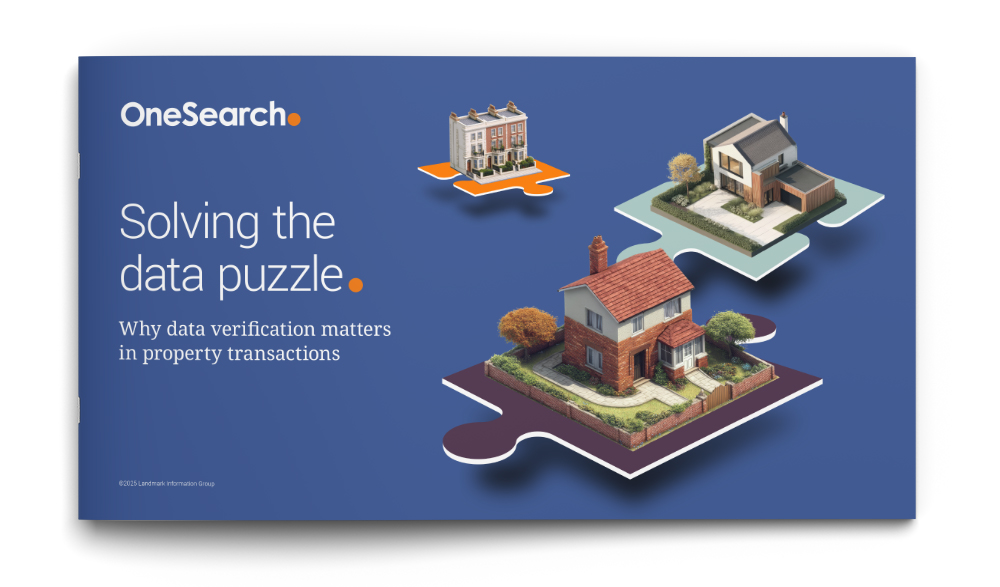
Fill in the form below to download your complimentary ‘Solving the
data puzzle’ guide:
The conveyancing industry is constantly changing. New regulations emerge, client expectations shift with each transaction and technology is evolving at breakneck speed.
To keep up, property professionals need to partner with search providers that move with the times; partners that respond quickly and confidently with clear communication, using transparent processes. Reliable partners that react to immediate needs and invest in your long-term success.
Alas, all too often, search providers deliver less than stellar customer service. They’re reactive, scripted and frustratingly disconnected from the realities of modern practice, treating customer service as an afterthought rather than the cornerstone of a partnership.
With effective customer service, your search provider can truly understand your business and adapt its service to meet your needs – and those strong foundations mean you can focus on what you do best.
How to spot static service
In an industry so reliant on timing and accuracy, broken customer service is more than frustrating. It’s risky.
Static customer service appears in predictable patterns. Maybe your everyday queries disappear into black-hole ticketing systems. Maybe communication channels feel more like swamps as you’re bounced from department to department, forced to repeat your problem to multiple disengaged CSRs and account managers who lack context about your business’s needs and challenges.
More concerning, though, is the lack of company-level response to core industry changes. No guidance for new regulations. No support when processes change. No evolutions to match shifts in client expectations.
You need to be able to rely on your search provider to support you through the challenges as they arrive; to have a clear, definite response that helps you move your business forward, so you can please your own clients. Static service leads to static results, and in this dynamic market, static results means falling behind. Fast.
What good service looks like
No business operates in a vacuum – and neither should the support you get from the partners you choose. You need to be able to call on a customer service team that does more than respond to queries in its own time. You need to work with people who anticipate your needs, understand your challenges and adapt to you and the wider market.
So, when new legislation rolls in, your search provider proactively shares and explains guidance to support you as you adapt to a new way of working. When software and tech updates inevitably happen, humans reach out to explain the changes and respond to questions. And when the pressure is on to work through complex data in a very short turnaround, experts are there, by your side, listening, getting the work done and removing the confusions, delays and risks.
At the very heart of good service is people, trained professionals who understand the intricacies of conveyancing, whether in large national law firms or in local high street solicitors.
Staying human in a digital world
Technology, AI and automation are game changers, there’s no question. They increase responsiveness and accuracy and enhance human-led service. They give people the space to apply sense, find creative solutions and build the relationships crucial for effective customer support. Digital platforms make information more accessible, but personal relationships ensure it is relevant and actionable.
And this is the difference between a service provider and a partner: partners invest in your long-term success while providers merely react to your immediate needs.
Partners take time to understand your practice, your goals, and your challenges; they celebrate your successes, keep you agile and help you navigate obstacles. When market conditions change, partners don’t just update services — they communicate how these changes might impact you and deliver forward-thinking support that keeps pace with your ever-evolving needs.
The detective work behind every search
Great customer service from an effective partner needs to be responsive, of course. But it also needs to be right. Combining technological capability with investigative instinct ensures your partner catches data inconsistencies that could derail your transactions before they become problems.
Experienced professionals don’t just process searches; they scrutinise them. When property boundaries don’t align with historical records, when planning applications seem incomplete or when ownership details raise questions, it’s the trained human eye that spots these red flags early – not automation or tech. Human expertise and experience alone can recognise and investigate the patterns and anomalies that systems might miss. They cross-reference multiple sources, question discrepancies and provide context that transforms raw data into actionable intelligence – and explain implications and suggest next steps.
This data sleuth approach means fewer nasty surprises, fewer transaction delays and more confidence in every search result. And your clients benefit from that level of thoroughness, even if they never know about the prevented potential issue.
Fill in the form below to download your complimentary ‘Solving the
data puzzle’ guide:
Our parent company Landmark Information Group is among some of the UK’s leading organisations from across the property sector who have united to streamline the property transaction process and bring certainty back to the sector. Our bold ambition is to transform how we buy and sell property for good.
The Charter is a cross-industry commitment to transform the UK property market by reducing the time from sale agreed to exchange to just 28 days.
For the first time, mortgage lenders, brokers, estate agents, conveyancers and property data providers have come together to define eight key commitments aimed at streamlining the property transaction process and delivering better outcomes for all.
Landmark Information Group is committed to bringing certainty, transparency and speed to the home buying process.
Read more: https://hubs.la/Q03J4xkL0
Climate change is now having a systemic effect on the property market. Landmark’s latest market research report – Climate change in the property sector: A cross-market update, seeks to understand what progress is being made on climate change related resilience and what notable barriers remain.
For this report, Landmark interviewed 150 senior property professionals: estate agents, residential conveyancers and mortgage lenders; all with decades’ worth of experience. In a muted market, beset by other pressures, conveyancers report buyers are increasingly walking away from risky transactions, suggesting a growing consumer sensitivity and more serious financial implications attached to climate data.
Some of the key findings of our 2025 research include:
- 99% of property professionals say their clients are concerned to some degree with the evolving / future potential threat of climate change when buying a property.
- 93% of property professionals say that recent climate events have impacted the way they advise clients to think about climate related risks and how they could affect their home.
- On average, property professionals are advising 52% of their clients on potential climate change risks to their property (up from 50% in 2024).
- Nearly three quarters (74%) of the conveyancers we spoke to now have a net zero strategy.
Download the report by clicking below.

The paperwork is done. The deadlines are tight. Everything is on track for a smooth completion. But then, a piece of the search data doesn’t quite fit.
Maybe it’s a conflicting record, a missing detail, or a late-stage query from a third party. This moment of doubt is familiar to every conveyancer; the ripple of uncertainty that can quickly become a full-blown wave of delay, client frustration, and unexpected risk.
This blog uncovers four of the real risks that lurk in the details of property transactions, and how to spot them before they stall your next case.
- The Architectural Blunder
Imagine a client purchasing a multimillion-pound property in an affluent London borough, with grand plans to repurpose the interior into their dream home. They assume planning permission will be a formality, only to discover a critical restriction post-purchase. Feeling powerless and bitter, the homeowner makes a defiant gesture by painting the façade in a dramatic colour scheme. This move immediately ran afoul of even more local regulations, as the property was in a conservation area, meaning strict rules governed its exterior appearance. The homeowner was legally compelled to repaint the house to its original visage, a costly obligation for which they were entirely unprepared.
The OneSearch Solution: This example highlights a critical pitfall: a lack of awareness about local planning and conservation rules. Without a comprehensive search, a buyer can inherit costly obligations. Our detailed reports bring these vital details to light before purchase, ensuring buyers understand a property’s true limitations and avoid unexpected financial burdens and disappointment.
- The Unforeseen Public Right of Way
In a move to make everyone envious, a wealthy couple purchased a vast country estate with roaming fields for garden space, only to discover an unexpected feature: legally protected public rights of way crisscrossing their land. Despite their desire for privacy and claims that these paths infringed on their human rights, the ancient rights of public access in England and Wales legally superseded their personal desires. People continued to walk through parts of their private estate, turning a dream of seclusion into a persistent privacy issue.
The OneSearch Solution: This story illustrates a common issue for many property buyers. Countryside rights of way are heavily protected and can significantly impact the enjoyment and use of a property. Without proper searches, a buyer might unknowingly acquire land with legally protected footpaths, leading to unexpected conflicts. Our property searches uncover these crucial details, ensuring buyers are fully aware of all access rights tied to their new home and the acres of land that it comes with.
- The Chancel Repair Liability
For many, buying a home near a beautiful old church seems idyllic. However, an archaic and often surprising law known as Chancel Repair Liability can turn this dream into a financial nightmare. Dating back centuries, this obscure law can burden property owners with the financial responsibility for repairing the chancel (the area around the altar) of a local church. This liability is tied to the land’s history, not the current owner’s religious beliefs. There are real cases where unsuspecting homeowners have faced demands for hundreds of thousands of pounds for church roof repairs; a devastating blow that can come completely out of the blue, years after purchasing a property.
The OneSearch Solution: This unfortunate example underscores the vital importance of understanding all potential liabilities tied to a property. Our selection of indemnity add-ons includes chancel insurance, safeguarding buyers from this potential and incredibly costly hidden obligation, ensuring their peace of mind long after moving in.
- The Hidden Flood Risk
A retiring couple, envisioning a peaceful new life in a downsized property, moved into a house only to discover a shocking secret: an abutting pond regularly overflowed into the back garden. The previous owners had failed to disclose this critical issue, leaving the new homeowners with a persistent and damaging problem they were entirely unprepared for. This unfortunate example underscores the vital importance of understanding environmental risks associated with a property.
The OneSearch Solution: Flooding is just one of many potential environmental hazards that can impact a home’s value, insurability, and liveability. Without thorough environmental searches, buyers might unknowingly purchase properties in high-risk areas. Our comprehensive environmental reports access vast datasets and expert analysis to inform buyers of potential risks, enabling them to make truly informed decisions and avoid such distressing surprises.
Every Piece in Place. Every Transaction Secure.
These four illustrations demonstrate a crucial truth for conveyancers and buyers: our homes are seldom straightforward. Furthermore, the data attached with them needs to be as accurate and as authentic as it can possibly be. In a market filled with nuanced risks and unexpected pitfalls, only a meticulous, comprehensive approach to data can truly safeguard your clients and your firm from hidden liabilities.
At OneSearch, this meticulous approach is not a feature; it’s the anchor of what we do. Our uncompromising quality and expert problem-solvers are dedicated to ensuring your conveyancing transactions are built on a bedrock of certainty. We are specialists in finding the hidden risks, correcting the inconsistencies, and giving you the peace of mind to advise your clients with unwavering confidence.
Don’t let your next transaction be stalled by the unexpected.
For more examples of the real risks that lurk in the details of property transactions, as well as details on how to spot them, grab our latest guide: ‘Solving the data puzzle’, available now.
Fill in the form below to download your complimentary ‘Solving the
data puzzle’ guide:
The year is 1995. Barely anyone knows what an email is, and smartphones are a distant dream. A young Liz Jarvis begins her career in property, facing challenges that seem almost Dickensian by today’s standards.
Her daily routine often involved grappling with a map tank, a gargantuan metal beast filled with oversized paper maps held together with tape and a prayer, where crucial property details were manually drawn, scribbled out, and drawn again. It was a world of queues for the library photocopiers and urgent pager calls, with the hope the local phone box still worked.
This era marked the early steps of OneSearch, and as Liz, now Managing Director, looks back on her three-decade journey with the company, it reveals far more than just a personal ascent. It’s a compelling narrative of how OneSearch grew from those analogue roots to become a leader in digital data, a testament to its enduring adaptability, formidable resilience, and an uncompromising dedication to delivering the complete, accurate picture to conveyancing professionals.
OneSearch, then known as SPH, began its life in 1992, rooted in a small-town planning practice in West Dunbartonshire. Thirty years ago, the world of property data was a landscape unrecognisable to today’s digital natives. There was no email, no instant downloads, no bespoke systems. Information was solely a physical commodity, painstakingly collected and manually processed.
“How we used to have to stand in a public library and commandeer the photocopier all day as we copied agendas,” Liz recalls, a chuckle in her voice. Her colleague, Heather Nash, who started around the same time, paints an even more vivid picture: “I remember having to go and photocopy Tree Preservation Orders and planning applications and then navigate my way back on the train… with my bag full of photocopies all the way back to the office again.” These bags, heavy with paper, were just the start. Once back at the office, everything had to be manually input.
Even basic communication was an odyssey. If a “roadie” – OneSearch’s intrepid data collectors – was out in the field, a pager would summon them. “You always had spare change in your pocket and try and find a public payphone which wasn’t always the easiest,” Carol Gildea, OneSearch Head of Operations recounts. “It’s like Victorian times,” Liz adds, reflecting on the sheer obstacles posed by communication in those early days.
The physical office mirrored this paper-heavy reality. “Everything used to be held on lever arch files,” Carol explains. “If you wanted to find out to conduct the search you had to check all of the folders individually.” Shelves groaned under the weight of paperwork, maps, and written statements. The morning post wasn’t just a handful of letters; it was “literally sacks and sacks of newspapers for the data collection.” Search results, once compiled, had to be printed, stuffed into huge DX or legal post bags, and physically collected each day. Caroline Taylor, who joined OneSearch in 2006, remembers that “opening all the mail used to be like a task that would typically take all morning.”
The Front Lines: Roadies, Resistance, and Resilience
Liz, Carol, and Heather were among OneSearch’s early roadies, the pioneers who ventured out to councils across Scotland to gather data first-hand. Their job wasn’t just physical; it was often met with resistance.
Carol vividly recalls an encounter with one planner in particular. She needed clarity on a smudged entry in a vast map register, where planning applications were often written in pencil. The planner’s response was, to say the least, a tad hostile.
“I remember them saying things to us like, ‘you’re stealing the bread from our children’s mouths’. They said it so loudly that everyone in the planning department just stopped what they were doing and looked.
“And I thought to myself back then, what kind of company have I joined here?!”
This intense opposition, born from fear of a new, more efficient model, forced OneSearch to be tenacious and innovative. Liz even shared how they had to “create different company names to get in to get more appointments” with councils that limited access.
Despite the challenges, the roadie life fostered a unique camaraderie and deep understanding of the country. Liz’s personal “food run” – collecting Forfar bridies, Arbroath smokies, and Aberdeen butteries for colleagues and neighbours – paints a warm, amusing picture of the lengths they went to. Carol echoes the sentiment: “It was actually one of my favourite roles… I just loved the freedom of meeting people and going to different areas every day.” Even the frustration of receiving a pager notification for an urgent search, miles from home, necessitating a frantic search for a phone box and a “hightail it away back up to the council again,” is remembered with a wry fondness.
Evolution, Adaptation
The journey from those manual, often combative, days to today’s seamless digital operations is a testament to OneSearch’s relentless pursuit of efficiency and quality.
“It’s just amazing to think where we are now in terms of how we operate,” Carol reflects. “Everything is at our fingertips.” The shift from fax machines with queues of people waiting, to instant digital communication with road agents, dramatically cut turnaround times.
Caroline, from her finance perspective, saw this evolution in how OneSearch dealt with councils. “a lot [of the Local Authorities] were very, very resistant to change,” she notes, regarding the move away from cheques to online payments and invoices. COVID-19 ironically became a catalyst for some of these changes, forcing councils to embrace digital access that many have since maintained.
OneSearch’s foresight in adopting a unique model early on – collecting CON29 data in-house – proved prescient. This proactive approach positioned them perfectly for the era of upfront data. Liz recounts how digitalising Local Land Charge registers, once a “pipe dream,” is now a reality. “I’d like to think that we were forward thinking that we just foresaw that rather than just being lucky,” Carol adds.
Resilience: Bouncing Back from the Unimaginable
OneSearch’s 30-year journey isn’t just one of growth; it’s one of profound resilience. Caroline highlights the company’s ability to navigate immense challenges: “We’ve had the banking crash, we’ve had the removal of HIPs overnight, and the business is still here to tell the tale.”
Then there was the fire. An actual fire in the roof of the building. Liz received the call at 4AM, but by lunchtime, thanks to a well-rehearsed disaster recovery plan, OneSearch was “up and running and producing searches again.” Carol remembers competitors even reaching out to offer support during that time, a testament to the industry’s solidarity. The rapid pivot to remote work during the COVID-19 lockdown, with business “not even impacted whatsoever,” further cemented OneSearch’s adaptability.
The Unchanging Core: People and Partnership
Despite all the technological leaps and market upheavals, one thing has remained constant: OneSearch’s unwavering commitment to its people and its customers.
For customers, this translates into a unique service model. Carol, from her time as customer services manager, insists: “We don’t want to be perceived as a call centre. We’re there as a partner and as a support for our customers, so we want to build that relationship.” This personalised support means customer service staff “know exactly who they’re speaking to,” building trust that goes “a long way as to how the business continues to grow.” Even with urgent requests, OneSearch now offers solutions like Express searches and leverages long-standing relationships with councils for favours, ensuring clients get the help they need. The preference for communication may have shifted to email for busy solicitors, but the underlying dedication to direct, helpful conversation remains.
Caroline summarises the incredible journey: “It amazes me the actual resilience of the company… We’ve seen so many bad things happen, but we’ve always bounced back. We’ve always managed to work our way through.”
Now it’s 2025, and OneSearch stands as a beacon of stability and quality, a testament to three decades of adapting, innovating, and prioritising the human element. From commandeering photocopiers and fighting for appointments to instant digital delivery and personalised support, the journey is far from over, but the core commitment to solving the conveyancing puzzle for their partners, perfectly, remains as strong as ever.

Ready to see how the industry knowledge and experience available at OneSearch can help you and your firm with your property data requirements?
Fill in the form below to download your complimentary ‘Solving the
data puzzle’ guide: