Conveyancing is built on process. For your clients, it’s built on emotion.
By the time a transaction starts to slow, most people have already spent weeks worrying; about timings, about money, about whether everything will fall apart at the last hurdle.
That anxiety doesn’t disappear. It builds, and sooner or later, it comes to you.
According to Landmark Information Group’s 2026 market research, the average transaction takes 123 days from instruction to completion. Conveyancers spend 41% of their working day chasing or being chased for updates. And 42% cite slow transaction times as their number one professional frustration.
Behind every one of those delays is a client who doesn’t fully understand what’s happening, why it’s taking so long, or whether it’s still going to complete at all. That uncertainty is where anxiety takes hold.
Mental Health Awareness Week feels like the right moment to address this directly; not with platitudes, but with something practical.
What the guide covers
We’ve put together a free guide: Managing Client Anxiety Through a Transaction. It’s written for conveyancers who want to manage the human side of a transaction as competently as the legal side, without it consuming more of your day than it already does.
The guide covers five areas:
- Why delays hit clients so hard: and why the anxiety response is rational, not irrational
- What anxious clients actually need: which is often not what they say they need
- Communication habits that reduce anxiety without adding to your workload
- Looking after yourself: because practitioner wellbeing matters too, and it’s under-discussed in this industry
- A quick-reference checklist: a clean pull-out you can keep to hand or share with your team
This isn’t a therapy guide, and it isn’t a sales presentation. It’s the kind of thing you might work through with a colleague over coffee – practical, direct, and grounded in how conveyancing actually works.
Why we wrote it
Delays aren’t always avoidable. But the anxiety they create often is… or at least, it can be reduced significantly with the right communication habits and a clear head about what clients actually need from you.
That’s a conversation worth having, and Mental Health Awareness Week is a good prompt to have it.
Managing Client Anxiety Through a Transaction is free to access: no form to fill in, no follow-up sequence.

Uncertainty isn’t new to the housing market, but in 2026 it feels closer to the surface.
Affordability pressures, shifting mortgage conditions, and broader economic headwinds mean buyers and sellers are hesitating for longer and thinking harder before committing.
That hesitation has a knock-on effect for conveyancers. Transactions take longer to progress, confidence can fluctuate mid-process, and the risk of late-stage disruption increases.
In a recent podcast conversation, OneSearch Managing Director Liz Jarvis was joined by Millar & Bryce Managing Director Richard Hepburn to explore how that uncertainty is showing up in today’s market, and why one factor matters more than most when it comes to keeping transactions on track: clear, upfront information about the property.
Confidence is built early, or it isn’t built at all.
When buyers feel uncertain – about affordability, their finances, or the property itself – they pause. And when transactions pause, momentum is lost.
As Liz puts it: “The biggest thing that drives the market is how confident people feel.”
For conveyancers, this makes the early stages of a transaction critical. The more unknowns that sit unresolved at the start, the greater the chance they resurface later as friction, delay, or a deal-breaker. Upfront information helps remove that uncertainty sooner, before emotional and financial investment deepens.
A slower market doesn’t automatically mean weaker transactions.
An important distinction worth holding onto: a quieter market doesn’t automatically mean poorer outcomes. As Liz notes, “What we’re seeing now is fewer buyers, but they’re committed buyers.”
Those still active are people who need to move, not casual browsers. That means transactions are often more likely to complete, but only if unexpected issues don’t surface late in the journey.
Time is where risk creeps in.
Longer transaction timelines give uncertainty more room to grow. The more time that passes between offer and completion, the more chance there is for circumstances to change, priorities to shift, or doubts to set in. In England and Wales, where extended timelines are already the norm, that window of vulnerability is wider than most.
Why upfront information matters now.
Upfront information isn’t about adding friction at the start of a transaction. It’s about helping buyers and sellers make informed decisions sooner, so they commit with confidence rather than assumptions.
Liz summarises it simply: “It’s allowing people to get access to information around the property… before they move further into the process.”
When clarity comes late, trust erodes quickly. When it comes early, transactions tend to feel calmer, more predictable, and more resilient.
If keeping transactions on track matters to your firm this year, the full conversation with Liz and Richard is worth twenty-five minutes of your time.
👉 Watch or listen here:

The first quarter of the year is always a pressure test for conveyancing teams.
Instructions from January are hitting their critical middle stage, client patience is thinning, and the industry’s average instruction-to-completion time of 123 days means the calendar is already working against you.
But in 2026, there’s a sharper edge to that pressure. It isn’t just workload – it’s the compounding effect of unreliable information. Missing details, inconsistent datasets, and errors that should never have made it through create a different kind of drag: one that’s harder to plan for and harder to explain to clients.
At the core of most preventable delays lies a single, underappreciated factor: data integrity.
Conveyancers are absorbing the cost of poor data.
Research shows conveyancers now spend 41% of their working day following up on updates, correcting inconsistencies, or chasing missing details – all consequences of inaccurate or incomplete data reaching them in the first place.
That’s not a workflow problem. It’s a data problem presenting as a workflow problem.
When so much time is consumed fixing issues that shouldn’t exist, the knock-on effects are predictable: slower progress, more enquiries, frustrated clients, and a rising risk of transactions falling through. And even a single misallocated or incorrect data point can derail what should be a straightforward case.
Why this matters more than most realise.
Across the sector, Landmark research has identified the data challenges that consistently create friction for conveyancing firms: poor system integration and interoperability (cited by 37% of firms), security and compliance concerns (37%), legacy systems and limited IT bandwidth (36%), and inconsistent formats that make data difficult to reconcile.
Each of these feeds the same outcome: fragmented files, unexpected queries, and delays that compound across complex chains.
The rise of digital tools has brought genuine efficiencies – 78% of firms now use AI to assist fee earners – but technology is only as reliable as the information feeding it. Better tools with unreliable data still produce unreliable outcomes.
What conveyancers actually need.
The conveyancers who handle high-pressure periods most effectively aren’t necessarily those with the fastest turnaround times. They’re the ones who aren’t constantly firefighting.
What makes the difference, consistently, is information that arrives complete, accurate, and early enough to act on. The evidence backs this up: 73% of conveyancers say early insights give buyers more confidence, 69% say it speeds up the transaction overall, and 61% say it reduces the number of enquiries raised.
Clear, early data doesn’t add friction at the start of a transaction – it removes it from everywhere else.
When data goes wrong, the ripple is wide.
The consequences of poor-quality data rarely stay contained. A minor discrepancy caught late can collapse a deal. Incorrect property attributes introduce risk for buyers. Outdated environmental data can expose clients to liabilities they weren’t warned about. Extra enquiries lengthen timelines and increase administrative load. And throughout, the conveyancer’s professional reputation absorbs the strain.
In a market where clients expect clarity and estate agents are monitoring progress closely, even small data failures carry outsized consequences.
What a good data partnership looks like in practice.
The strongest advantage a search provider can offer in 2026 isn’t speed alone – it’s accuracy you can rely on, delivered early enough to change outcomes rather than just document them.
That means verified, consistently reliable datasets. It means reducing the time spent on avoidable administrative work. It means insights that support better client conversations, not ones that generate more questions. And it means acting as a genuine extension of the conveyancing team – not a detached supplier that creates extra steps.
With caseloads under pressure and timelines stretching, the difference between a partner and a vendor is whether they make your workload lighter or heavier.
For conveyancers navigating a demanding market, data integrity isn’t a technical concern sitting somewhere in the background – it’s the foundation every smooth transaction is built on.
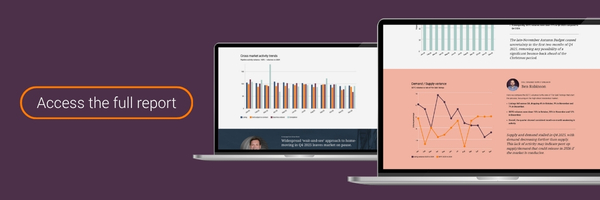
The property market is showing resilience but global pressures and affordability constraints are hampering home moving activity.
Supply and early activity are rising, but it remains a buyer’s market, with listing volumes not translating into completed transactions yet.
Our parent company Landmark’s latest Residential Property Trends Report is now available, featuring the most recent data on listings, SSTC/SSTM activity, search orders and completion volumes across England, Wales and Scotland.
Our Q1 2026 analysis shows that early‑stage activity strengthened as pent‑up supply returned to the market following the hesitation surrounding the Autumn Budget. However, progression remains slow, with affordability pressures and process friction continuing to weigh on overall transaction volumes.
England & Wales
- Listing volumes in Q1 2026 were up 3% compared to Q1 2025.
- SSTC volumes in Q1 2026 were down 8% compared to Q1 2025.
- Search order volumes were down 1% in Q1 2026 vs Q1 2025.
- Completion volumes in Q1 2026 were down 18% vs Q1 2025.
View the report for the latest trends affecting the residential sector in Q1 2026.
Every conveyancer knows the feeling. The file is progressing well, deadlines are manageable, and then something surfaces in the search data that doesn’t quite fit.
A conflicting record. A missing detail. A query that arrives too late to resolve cleanly. These moments rarely come from nowhere. More often they’re the predictable consequence of a gap in the data, something that was available but not caught, or available but not ordered.
Here are four of the risks that appear most consistently, and what good search data looks like in each case.
Planning history that doesn’t travel with the property
Planning records are among the most commonly misread elements in a local authority search – not because the data is wrong, but because it requires interpretation. A restriction that applied to a previous use, a consent that was granted but never implemented, a condition attached to an older permission that the current owner has quietly ignored – none of these are hidden. They’re in the data. But they require someone to look at the full picture rather than the headline.
The risk is greatest on properties with complex histories: former commercial uses, extensions built under permitted development, conversions from one use class to another. In conservation areas, the detail required is even more precise – not just whether works were approved, but whether they were approved under the correct consent route.
The search data should surface this. If it doesn’t, the problem isn’t the planning history – it’s the search.
Rights of way that aren’t visible on site
Public rights of way are a good example of a risk that feels theoretical until it isn’t. A right of way that crosses a garden or driveway doesn’t affect every transaction – but when it does affect one, and the buyer wasn’t told, the consequences are significant and the firm’s position is uncomfortable.
The challenge is that rights of way aren’t always visible on the ground. A path that hasn’t been walked in years is still legally protected. A route that’s been physically blocked by a previous owner remains on the definitive map. The seller may be entirely unaware.
A local authority search will include rights of way data, but the quality of that data varies considerably depending on the source and how recently it was verified. Knowing where your provider’s data comes from, and how current it is, matters more for this particular risk than almost any other.
Chancel repair liability on older rural stock
Chancel repair liability is one of those risks that experienced conveyancers are well aware of and occasionally encounter in practice. The liability, which can require a property owner to contribute to the cost of repairing the chancel of a local parish church, dates from medieval land law and is tied to the land rather than the owner’s beliefs or connection to the church.
Since 2013, unregistered chancel repair liability is no longer an overriding interest, meaning it must be registered to bind a purchaser. But for properties that changed hands before that date, registered liability can still exist and still bite.
The appropriate response is straightforward, a chancel search where the risk exists, and indemnity insurance where it’s warranted. The less straightforward part is identifying which properties warrant the extra step. Rural properties, older stock, and land near historic parish churches are the obvious candidates. The search data should prompt the question.
Flood risk that isn’t reflected in the asking price
Flooding is increasingly well understood as a property risk, but the gap between what a standard environmental search flags and what a property is genuinely exposed to has widened as climate patterns have shifted. A property that last flooded in 1987 may carry a lower risk rating than one that flooded in 2020 – but both carry risk, and neither is necessarily reflected in what the seller has disclosed.
The specific risk that catches firms out most often isn’t river or coastal flooding, which tends to be well mapped. It’s surface water flooding, the kind that results from drainage systems being overwhelmed during heavy rainfall, which is harder to model, less consistently reported, and increasingly common in areas that haven’t historically been considered at risk.
An environmental search that draws on current flood mapping, drainage records, and historical incident data gives a materially different picture from one that relies on older datasets. The difference matters when you’re advising a client on whether to proceed and on what terms.
What connects all four
None of these risks are obscure. Every conveyancer reading this will have encountered at least one of them in practice. What connects them is that they’re all data problems before they’re legal problems – and in each case, the quality and currency of the search data determines whether the issue surfaces at the right moment or the wrong one.
The search isn’t just a regulatory requirement. It’s the foundation on which advice is built. It’s worth knowing exactly what yours is built on.
For a closer look at how search data quality affects conveyancing outcomes – and what to look for when assessing your current provider – download our guide.
Fill in the form below to download your complimentary ‘Solving the
data puzzle’ guide:
If you’re advising a buyer, the new TA6 is less about what’s asked, and more about what isn’t.
The newly released 6th edition reduces seller disclosure, but it doesn’t reduce buyer risk. Knowing which gaps now need to be filled elsewhere is key.
For our latest Five Minutes On… article, we tackle the much discussed TA6 form. Lets get into it.
What the new TA6 no longer asks… and why that matters
The 6th edition strips out nine sections that appeared in the 5th edition. Several of them are directly relevant to search-based due diligence.
- Coalfield or mining area – sellers are no longer asked to disclose whether a property sits in a former coalfield or mining area. That risk doesn’t go away. A CON29M or specialist mining search remains the appropriate way to surface it.
- Coastal erosion – removed from the TA6 entirely. For properties in at-risk coastal zones, an environmental or specialist coastal erosion search is the only reliable source of this information.
- Building safety – questions around cladding, remediation and the Building Safety Act have been taken out of the standard form. For leasehold properties in scope, the TA7 5th edition (updated alongside the TA6) picks up some of this – but the position on leaseholder deed of certificate, service charges and remediation funding still needs careful handling.
- Restrictive covenants – sellers are no longer prompted to disclose these. Title investigation and, where appropriate, indemnity insurance remain the tools to address gaps here.
What hasn’t changed
The seller’s legal obligations haven’t moved. Misrepresentation and caveat emptor still apply. The form being shorter doesn’t reduce the buyer’s exposure to undisclosed risks – it just means fewer of those risks are being asked about upfront.
The Law Society has confirmed that solicitors’ professional liability position is unchanged. A shorter form doesn’t reduce the duty of care.
A well-constructed search pack was always the right approach. The TA6 6th edition makes the case for it even more clearly, with less being captured at the seller disclosure stage, searches are increasingly where the picture gets completed.
With less being asked of sellers upfront, it falls to structured due diligence to carry the weight of those missing disclosures. The TA6 has been streamlined, not the risks that sit behind it, and that distinction matters when you’re building a search pack that genuinely protects your buyer.
The OneSearch team can help you identify which searches fill the gaps for any transaction. Explore the full Five Minutes On… library here.